
Transforming Maternal Nutrition Through Digital Innovation: SMART-MMS Enhances MMS Adherence Among Pregnant Women in Lombok

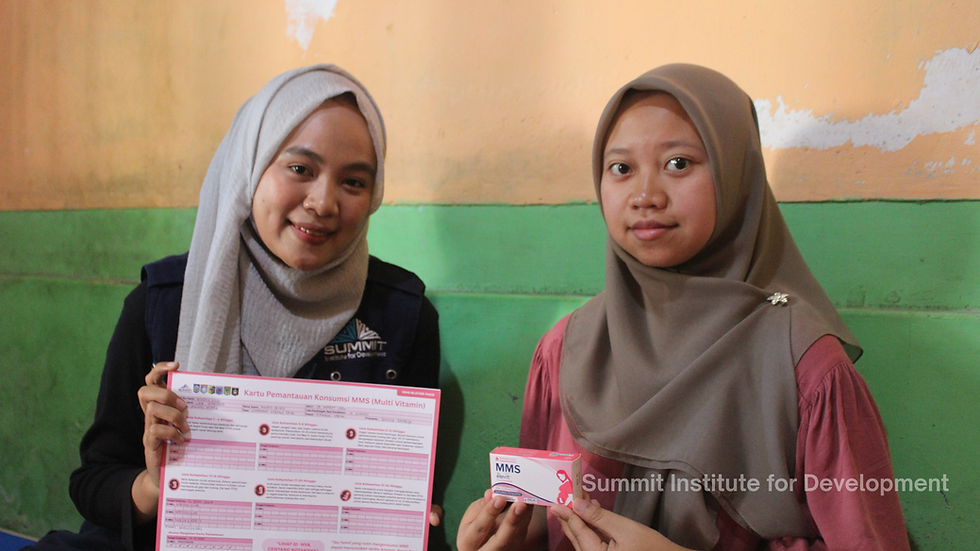
Efforts to reduce maternal mortality, infant mortality, and prevent stunting depend not only on the availability of healthcare services but also on ensuring optimal nutrition during pregnancy. In response to this challenge, the Summit Institute for Development (SID) has launched SMART-MMS (Study on Adherence to Multiple Micronutrient Supplementation Among Pregnant Women Through Digitalization), a research initiative that integrates nutritional supplementation and digital technology to improve maternal and child health outcomes across Lombok Island.
The program is driven by the persistent burden of maternal and child health challenges in Indonesia, including in West Nusa Tenggara Province. Although supplementation programs for pregnant women have been implemented for many years, adherence to supplement consumption remains a significant challenge that affects the effectiveness of nutritional interventions. Poor adherence can increase the risk of maternal anemia, low birth weight, preterm birth, and other health conditions that may negatively impact child growth and development.
Through SMART-MMS, SID seeks to address these challenges by combining public health approaches with digital technology to monitor the consumption of Multiple Micronutrient Supplements (MMS). MMS contains 15 essential vitamins and minerals designed to meet the nutritional needs of pregnant women and their developing babies. Compared to conventional iron and folic acid supplements, MMS provides more comprehensive nutritional support throughout pregnancy.
The SMART-MMS study will be conducted from 2025 to 2027 across five districts and municipalities in Lombok: Mataram City, West Lombok, Central Lombok, East Lombok, and North Lombok. The study will involve 60 primary healthcare centers (Puskesmas) and nearly 12,000 pregnant women, using a randomized controlled trial (RCT) design, widely regarded as the gold standard for generating scientific evidence.
As the project enters its implementation phase, participant enrollment officially began on June 13, 2026, across 12 Puskesmas and 23 Posyandu sites in East Lombok District. Through this process, eligible pregnant women are being recruited to participate in the study, which aims to generate evidence on the effectiveness of digital technology in improving adherence to MMS consumption.
According to Nurmalita Hartiyana Kusuma Wardani, SMART-MMS Project Officer, the study focuses on understanding the factors influencing MMS adherence and identifying the most effective strategies to support pregnant women in maintaining regular supplement intake.
“Historically, supplementation programs have focused primarily on distribution. However, the success of these programs ultimately depends on whether the supplements are actually consumed as recommended. SMART-MMS was designed to address this gap through a more measurable, data-driven approach,” she explained.
A key strength of SMART-MMS lies in its use of digital technology to support both pregnant women and healthcare workers. An automated WhatsApp system delivers regular MMS reminders and health education messages directly to participants. In addition, Community Health Promoters (CHPs) monitor supplement adherence using digital forms and an innovative AI Pill Counting technology that automatically estimates remaining tablets through photographs of supplement packaging. All information is integrated into a centralized monitoring dashboard, enabling rapid, data-driven decision-making.
This innovation is expected to address many of the challenges that have historically hindered maternal nutrition programs, including limited monitoring capacity, time-consuming manual recordkeeping, and difficulties in accurately measuring adherence. Through an integrated digital system, healthcare workers can identify and provide follow-up support more quickly for pregnant women who require additional attention.
Beyond measuring adherence, the study will also assess the impact of MMS supplementation on a range of maternal and newborn health outcomes. International evidence suggests that MMS has the potential to reduce the risk of low birth weight, preterm birth, and neonatal mortality, particularly among women affected by anemia during pregnancy.
SMART-MMS also serves as an example of how digital transformation can strengthen public health programs. By integrating technology into maternal nutrition interventions, the study not only generates more accurate and timely data but also creates opportunities for governments to develop more effective and sustainable maternal health monitoring systems in the future.
For SID, SMART-MMS is more than a research project—it is part of a broader commitment to building a strong foundation for health from the very beginning of life. By ensuring that pregnant women receive adequate micronutrient intake and adhere to supplementation recommendations, the program aims to contribute to a future generation that is healthier, stronger, and better equipped to reach its full potential.


Comments