
SMART-MMS Roadshow in East Lombok: Advancing the Reduction of Maternal Mortality, Infant Mortality, and Stunting Through Digitalized MMS Monitoring


The Government of West Nusa Tenggara Province, in collaboration with the East Lombok District Government and the Summit Institute for Development (SUMMIT), organized the SMART-MMS Socialization and Implementation Coordination Roadshow in East Lombok Regency on May 12, 2026, as part of efforts to strengthen maternal and child health programs through a digital innovation approach.
The event served as a platform to align stakeholders, strengthen coordination among implementing partners, and enhance readiness for the implementation of the SMART-MMS program. Representatives from provincial and district health offices, healthcare professionals, primary healthcare workers, and development partners participated in discussions on strategies to improve maternal nutrition and health outcomes through technology-enabled interventions.
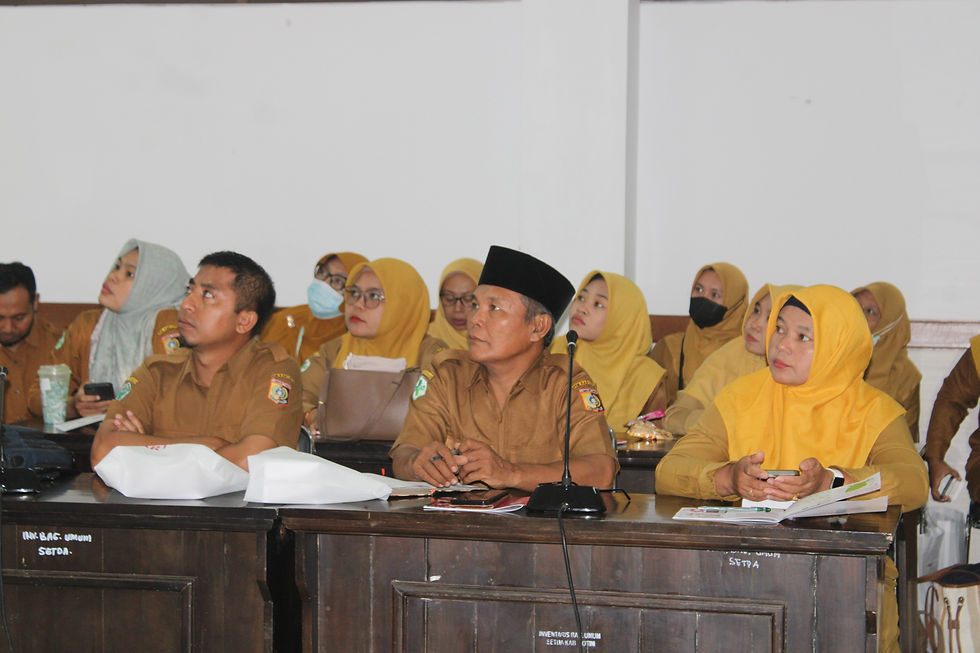
The event was attended by representatives from the West Nusa Tenggara Provincial Health Office, the East Lombok District Health Office, professional associations, primary healthcare workers, and the Summit Institute for Development (SUMMIT). The SMART-MMS program is designed to improve adherence to Multiple Micronutrient Supplementation (MMS) among pregnant women through a combination of digital monitoring systems and community-based support.
The Head of the East Lombok District Health Office, H. L. Aries Fahrozi, emphasized that SMART-MMS plays an important role in supporting efforts to reduce maternal mortality, infant mortality, and stunting in East Lombok.
“SMART-MMS is a strategic initiative to improve maternal nutrition during pregnancy. We hope this program will contribute to the realization of Indonesia’s Golden Generation by preventing stunting and reducing maternal and infant mortality in East Lombok,” he said.
In his remarks, the Regional Secretary of East Lombok Regency highlighted that East Lombok continues to record one of the highest stunting rates in West Nusa Tenggara. Therefore, strengthening adherence to MMS and iron-folic acid supplementation through digital technology, health education, and cross-sector collaboration remains a key priority.
Meanwhile, M. Johansya from the Nutrition and Stunting Working Team of the West Nusa Tenggara Provincial Health Office underscored the importance of digital support systems in the implementation of SMART-MMS, particularly in East Lombok, where geographical challenges can make healthcare delivery more complex.
“The approach begins early in the life course, starting from pregnancy. Education for pregnant women and their families is essential to improving adherence to MMS consumption,” he explained.
Yuni Dwi Setiyawati, Chief Executive Officer of the Summit Institute for Development (SUMMIT), explained that SMART-MMS is more than a research study; it is part of a broader effort to strengthen maternal and child health services in alignment with government programs. She noted that 25 years ago, the first SUMMIT program implemented in Lombok focused on MMS and later became a national and World Health Organization (WHO) reference for reducing maternal and infant mortality.
During the technical session, A. Rusdhy H. Hamid emphasized that maternal anemia remains one of the leading causes of pregnancy complications and maternal and infant mortality. As a result, MMS is considered an important intervention because it provides a more comprehensive range of micronutrients compared to conventional iron-folic acid supplements.
Participants also received technical guidance on recommended MMS consumption practices, supplement distribution and storage procedures, and the program’s digital monitoring system. The system incorporates WhatsApp-based reminders, monitoring dashboards, home visits conducted by Community Health Promoters (CHPs), and Artificial Intelligence (AI) technology to support adherence monitoring.
Nurmalita Hartiyana Kusuma Wardani, SMART-MMS Project Officer, explained that in East Lombok the program will reach pregnant women across 19 primary healthcare centers (Puskesmas). Participant enrollment is scheduled to take place between June and August 2026 and will target pregnant women with a gestational age of up to 32 weeks.
The roadshow also featured active discussions with healthcare workers regarding MMS service delivery, management of maternal anemia, logistics distribution, adherence monitoring strategies, and implementation challenges in remote and hard-to-reach areas.
Through this initiative, all stakeholders expressed their commitment to ensuring the successful implementation of SMART-MMS in East Lombok. The program is expected to contribute significantly to efforts to reduce stunting, maternal anemia, low birth weight (LBW), and maternal and infant mortality, while strengthening maternal and child health outcomes across West Nusa Tenggara Province.


Comments